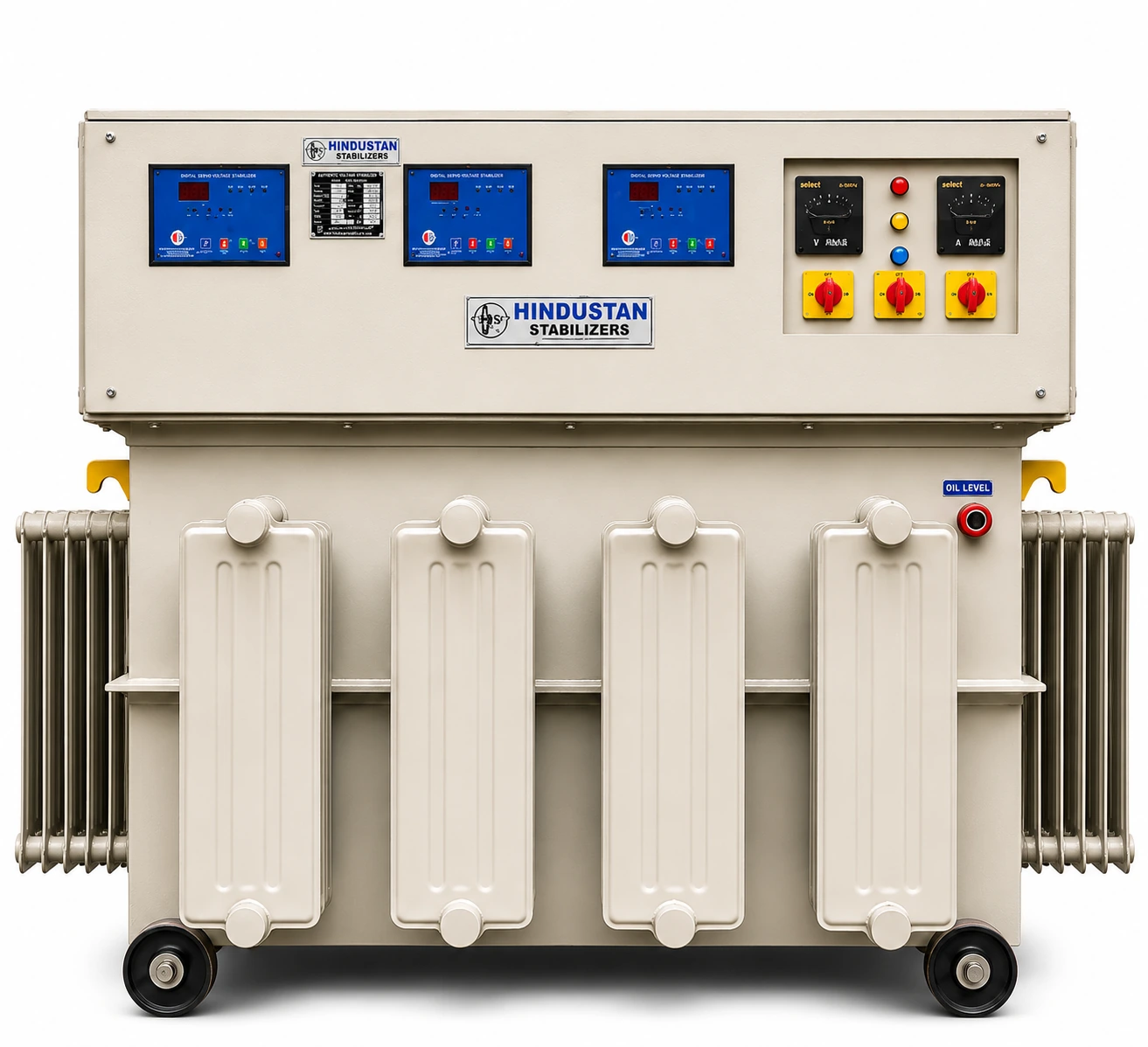
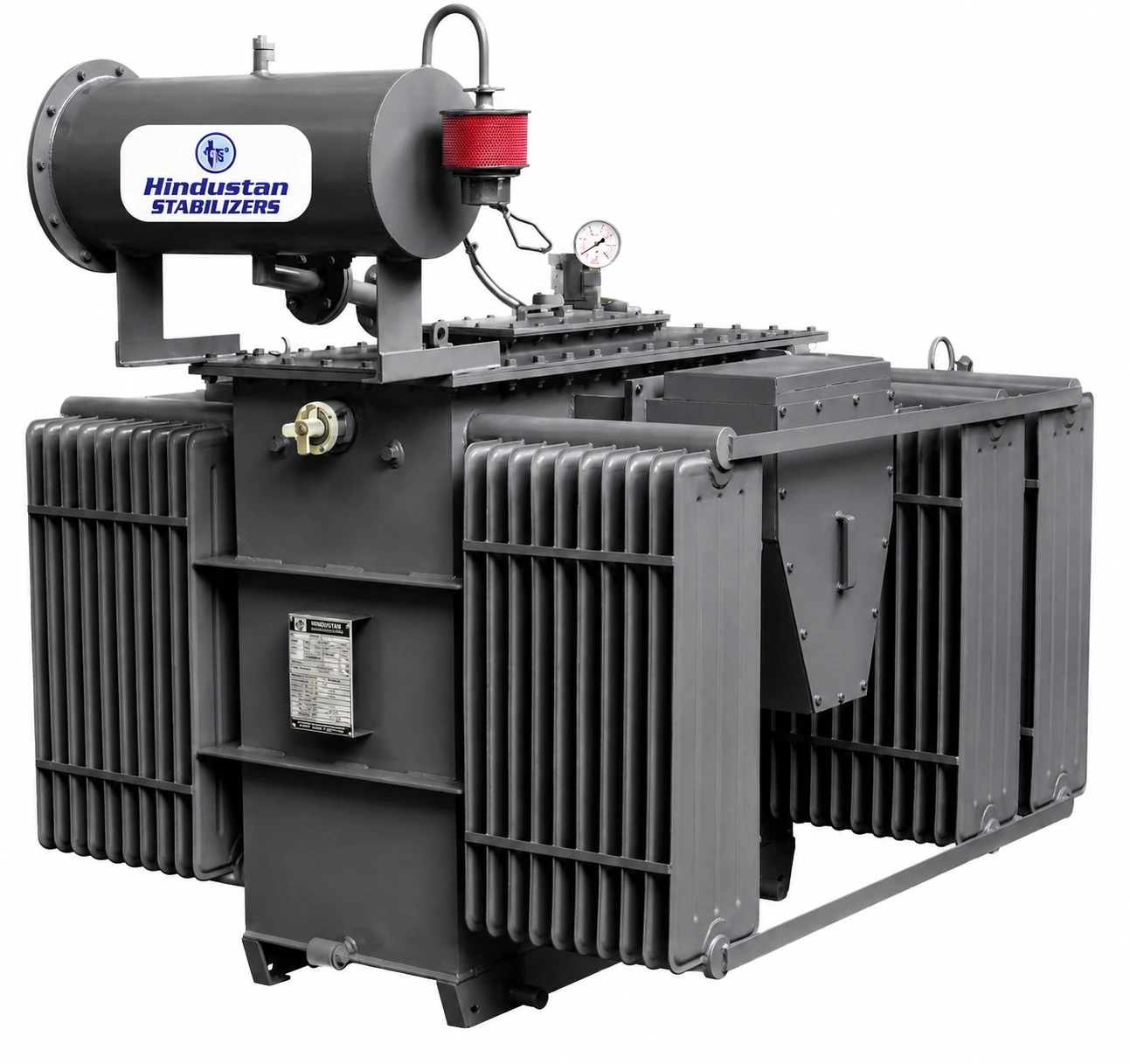
Step-Up / Step-Down Transformers
High quality single-phase and three-phase Step-Up and Step-Down Transformers designed to increase or decrease utility AC voltage for imported industrial machinery, specialized plant electrical loads, and export equipment.
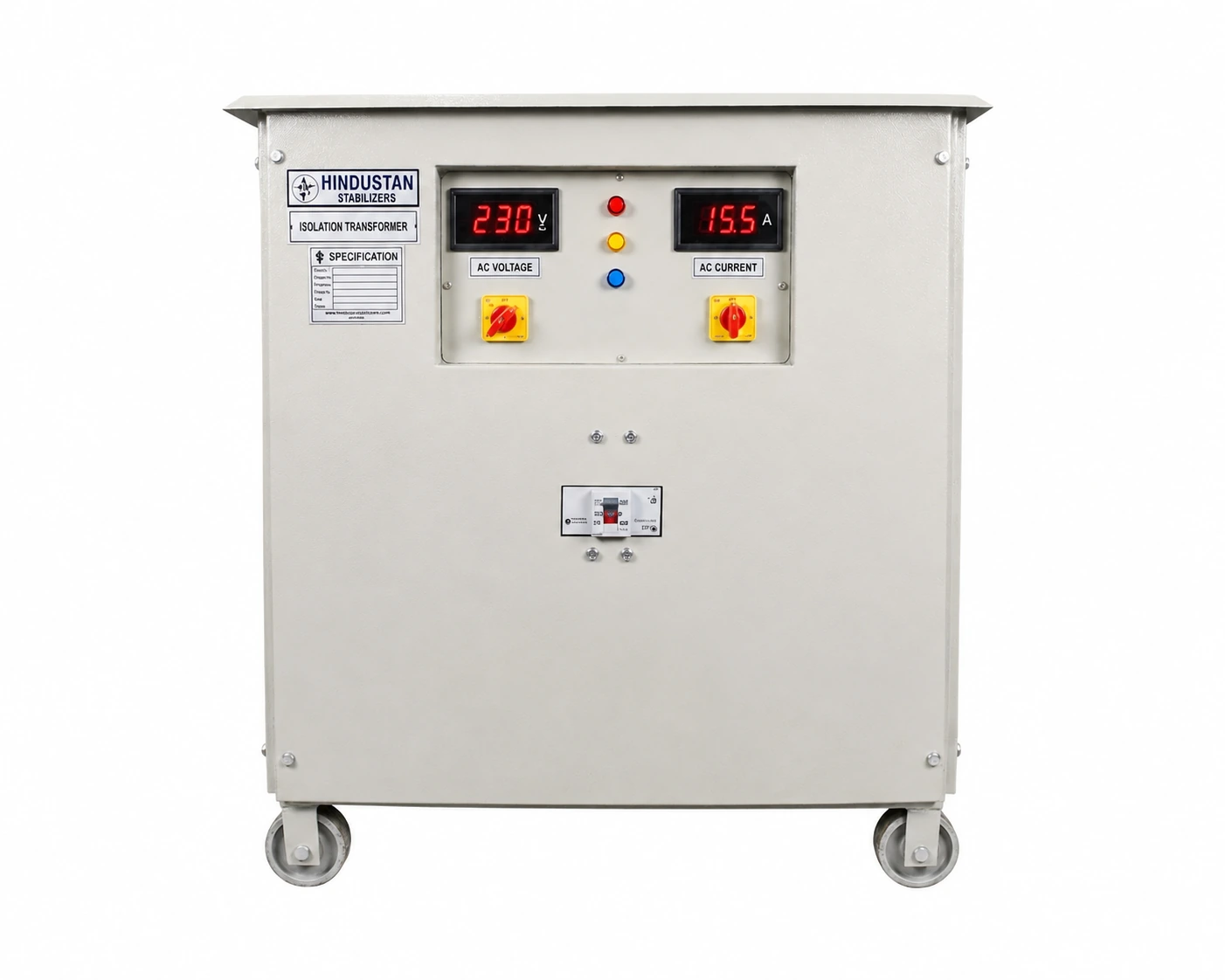
What is a Step-Up / Step-Down Transformer?
A Step-Up or Step-Down Transformer is a voltage conversion transformer designed to adjust incoming utility supply voltage to match specific machinery operating requirements. A Step-Up transformer increases secondary output voltage relative to primary input voltage (e.g. stepping up 220V to 400V or 480V). Conversely, a Step-Down transformer reduces secondary output voltage (e.g. stepping down 415V to 200V, 110V, or 24V). These transformers feature heavy-duty copper windings, Mylar/Kraft paper/Nomex inter-turn insulation, and high-permeability CRGO steel cores for seamless voltage adaptation.
Applications
Technical Specifications
| Parameter | Specification Details |
|---|---|
| Configuration Type | Delta / Star / Auto Transformer |
| Input Voltage Window | 230V Single Phase / 400V–415V 3-Phase (Or custom as requested) |
| Output Voltage Range | 110V–240V 1-Phase / 200V, 380V, 400V, 415V, 480V 3-Phase (Model dependent) |
| Winding Material | 99.9% Electrolytic Grade Copper Winding |
| Insulation Materials | Mylar, Kraft Paper, Nomex, Varnish (Class F / Class H) |
| Core Material | High-grade CRGO (Cold Rolled Grain Oriented) Lamination |
| Losses at No Load | Below 2% |
| Load Regulation | < 4% |
| Insulation Resistance | Minimum 1000 MΩ (@ 500V DC) |
| Breakdown Strength | Withstands 2.5 kV for 1 minute |
| Cooling Options | Air Cooled / Oil Cooled |
| Duty Cycle | 100% Continuous 24x7 Duty Cycle |
Engineered For Your Power Requirements
Hindustan Stabilizers custom builds Step-Up and Step-Down Transformers for any voltage ratio combination (such as 415V to 200V, 415V to 480V, 220V to 380V, or 110V step-downs). We manufacture both auto-transformer and double-wound isolation configurations in Air Cooled or Oil Cooled enclosures.
Why Hindustan Stabilizers
Frequently Asked Questions
Need the Right Transformer for Your Application?
Tell us your machine's required operating voltage, kVA load rating, input utility voltage, and phase. Our engineers will recommend the exact transformer.